

[ad_1]
The Earth reached its perihelion, or the closest point in its orbit around the Sun, on Wednesday.
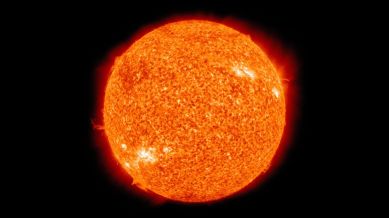
The Earth’s orbit around the Sun is not perfectly circular. Instead, it is slightly elliptical. This means that the distance between the planet and the star varies by about three per cent over the course of the year. On Wednesday, the Earth reached its perihelion, or the closest point in its orbit to the fiery star.
The exact time of the perihelion was at 6.08 AM IST on Friday. The planet completes one revolution around the Sun every year, this means that it reaches perihelion around the same year. In 2024, that day is January 3. Technically, this is also the day that the Sun appears the biggest in the sky but a three per cent difference in size is pretty much imperceptible to the human eye.


You have exhausted your
monthly limit of free stories.
Read more stories for free
with an Express account.
Continue reading this and other premium stories with an Express subscription.
This premium article is free for now.
Register to read more free stories and access offers from partners.
Continue reading this and other premium stories with an Express subscription.
This content is exclusive for our subscribers.
Subscribe now to get unlimited access to The Indian Express exclusive and premium stories.
Also, in case you are wondering, the change of seasons from summer to winter and vice versa is caused by the tilt of the Earth’s axis of rotation and not any difference in distance between the two celestial bodies.
The slightly enlarged Sun might be hard to notice during the daytime, but the sky holds another treat for those who watch it — a meteor shower that you can see at night. The Quadrantid meteor shower has been active since December 12 and will continue till January 12, with its peak happening around January 4.
When seen from New Delhi, the Quadrantids will not be visible until 12.07 AM each night while the radiant point (the point in the sky from where the meteor shower will appear to emerge) rises above the eastern horizon. The peak is expected around 4 PM IST on January 24. While Indian viewers will not be able to view meteors then, a spectacular show should still light up the sky till 6.46 AM IST the next day.
© IE Online Media Services Pvt Ltd
First uploaded on: 03-01-2024 at 12:47 IST
[ad_2]
Source link

